

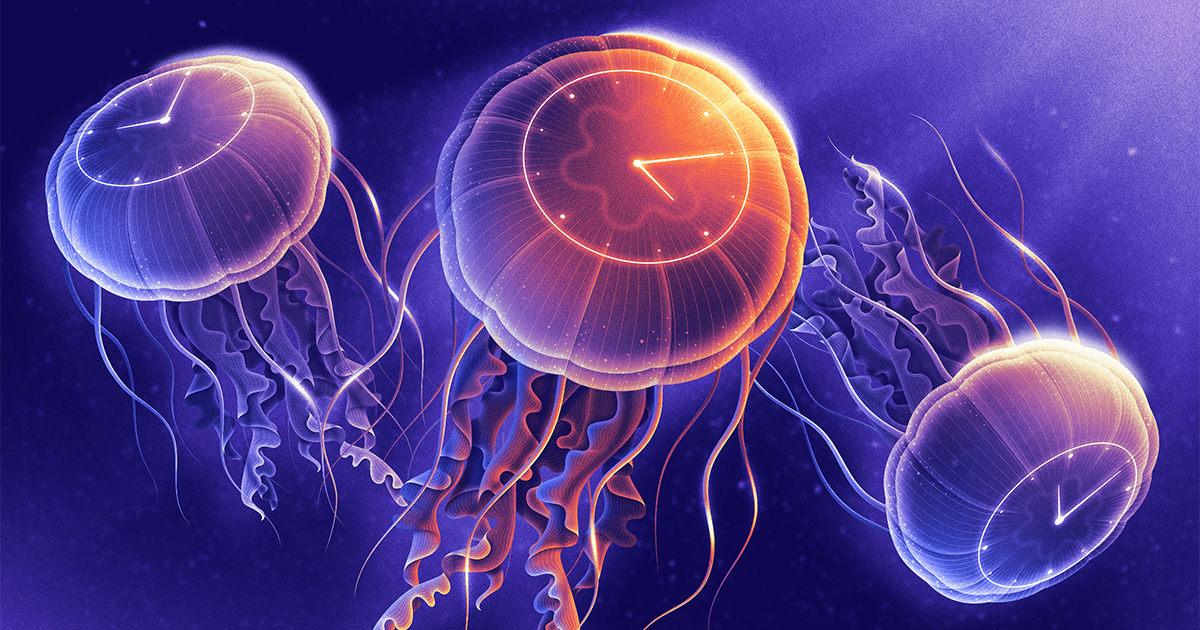
Off the coast of Japan, biologists netted a pea-size jellyfish with an unusual circadian clock — a chance finding that suggests there are likely more overlooked biological timekeeping mechanisms to be discovered. The passage of the sun across the sky — dawn, day, dusk, night — drives the clock of life. Some species wake with the sun and sleep with the moon. Others do the opposite, and a few keep odd hours. These naturally driven, 24-hour biological cycles are... [3148 chars]


2026 Copyright © News-Matic.com. All Rights Reserved