


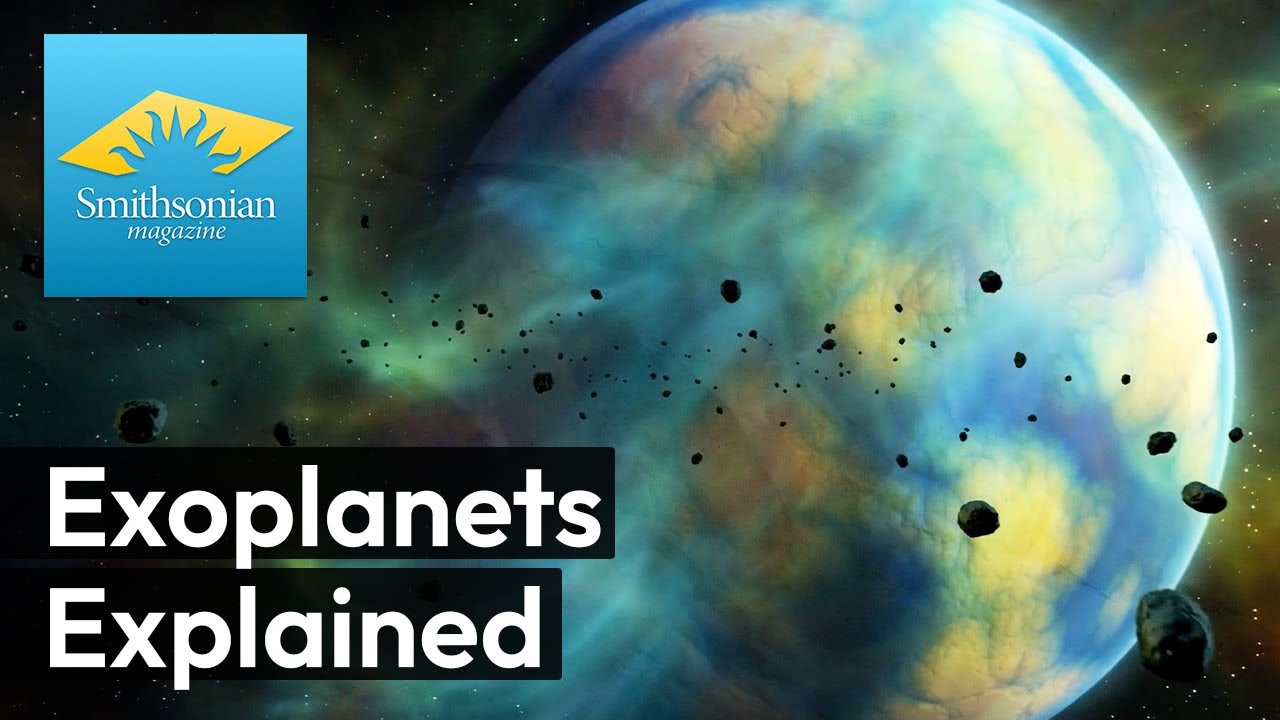
Have you ever wondered if there is life on another planet? Exoplanets may hold the key to this question. They’re planets that orbit stars beyond our solar system, and scientists find them by observing subtle changes in starlight. With this technique, they have discovered an incredible number of worlds, from giant gas planets to rocky Earth-like ones. Studying them helps scientists understand how planetary systems form—and whether life might exist beyond our galaxy. ___ A little more information: The study of exoplanets helps scientists learn more about how planets form, evolve and interact with their stars. To detect them, scientists rely on techniques like the transit method, which measures tiny dips in a star’s brightness when a planet passes in front of it. There’s also the radial velocity method, which detects small wobbles in a star caused by the gravitational pull of an orbiting planet. This research has uncovered thousands of worlds with remarkable diversity. Some exoplanets are massive gas giants orbiting extremely close to their stars, while others are frozen worlds far from any heat source. There are also rocky, Earth-size planets that may have atmospheres, oceans and the right conditions for life. It’s a science that also addresses one of humanity’s oldest questions: Are we alone in the universe? #exoplanets #space #NASA #cosmos #astronomy #solarsystem #spaceexploration #universe Subscribe: https://www.youtube.com/@SmithsonianMagazine Interested in learning more? Take a look at NASA’s full list of exoplanets here: https://science.nasa.gov/exoplanets/ From worlds that look like cotton candy to others covered in volcanoes, these are the strangest and most captivating exoplanets: https://www.smithsonianmag.com/science-nature/from-worlds-that-look-like-cotton-candy-to-others-covered-in-volcanoes-these-are-the-strangest-and-most-captivating-exoplanets-180986260/ Exoplanet discoveries pass the 6,000 mark, shedding light on how our solar system compares with the rest of the universe: https://www.smithsonianmag.com/smart-news/exoplanet-discoveries-pass-the-6000-mark-shedding-light-on-how-our-solar-system-compares-to-the-rest-of-the-universe-180987390/ Chemical hints on a distant planet offer ‘strongest evidence yet’ for life outside our solar system, astronomers say: https://www.smithsonianmag.com/smart-news/chemical-hints-on-a-distant-planet-offer-strongest-evidence-yet-for-life-outside-our-solar-system-astronomers-say-180986453/ For more videos from Smithsonian magazine: https://www.smithsonianmag.com/videos/category/original-series/ Executive Producers: Nicki Marko & Brian Wolly Supervising Producer: Michelle Mehrtens Scriptwriter: Carlyn Kranking Video Editor & Narrator: Adam Benavides


2026 Copyright © News-Matic.com. All Rights Reserved