

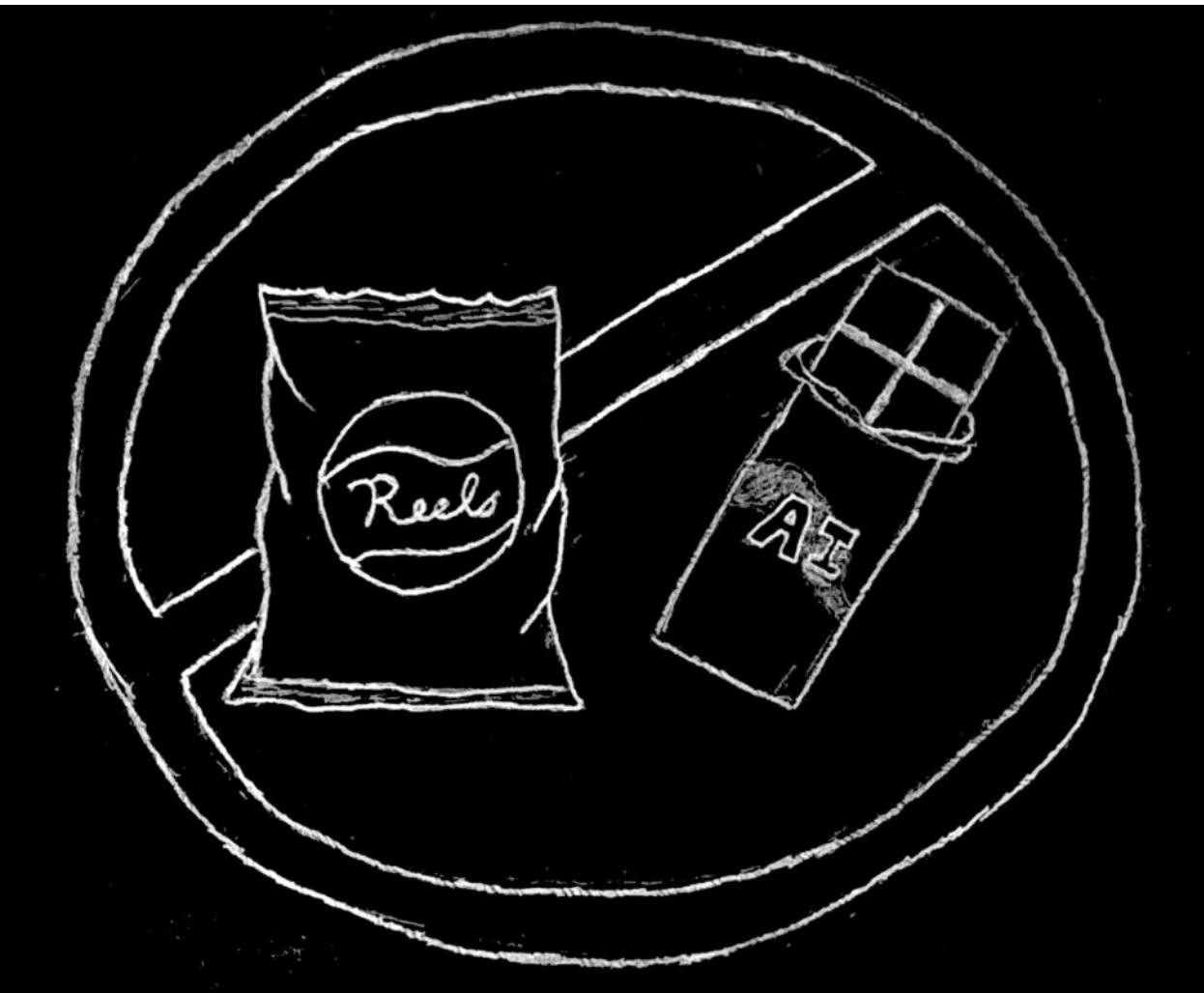
I've always been a picky eater. Perhaps not "picky" in the traditional sense, but rather that I am very specific about the food and nutrition that goes into my body. Even at twenty-three, I still diligently adhere to my parents' rules about no caffeinated drinks and only eating instant ramen once per month, I still avoid artificial sweeteners (even if the science on that may be coming back now), and I always ensure every meal consists of a sufficient balance of carbs, veggies and proteins.This mindset has always seemed like common sense to me; after all, the food that nourishes my body will ultimately determine a big part of my physical health, so why wouldn't I be picky about it? Recently, however, I came to a realization: if I am so careful about what feeds into my body, why don't I exercise the same selectivity for what feeds into my mind? While the consequences for poor nutrition of the brain may be less apparent, lately I have experienced the ramifications. Despite my best efforts, I have recently fallen into the black hole of doomscrolling. Having only gotten my first phone in my sophomore year of high school and never being the most "hip," I never ran into a problem of phone addiction like so many teenagers. Even through most of college, phone use never proved to be an issue. Now, I do not know when the tipping point occurred, but somewhere, somehow in the past two years I devolved into a habit of bed-rotting, scrolling through an infinite feed of Instagram reels. I reach for my phone when I wake up and find twenty minutes gone. I find myself scrolling before bed. And my productivity in study sessions plummet as I find myself picking up my phone more and more often. This scrolling almost always leaves me feeling empty and drained. Yet, in spite of these consequences, it only seems to get worse with each passing day, no matter how many strategies I try to overcome it. And I know I'm not alone. Much of our generation has fallen victim to this ever-increasing habit of doomscrolling, burning away our finite hours on Earth sitting sedentary in front of a blinking screen. But as it turns out, it's not entirely our fault. As blogger Gurwinder points out on his Substack, information is like sugar. Humans biologically crave it as an evolutionary relic of a time when it was scarce. But in our modern society, where it is easily available in excess, this craving has become a curse. Worse, corporations like Meta have learned to leverage this biological drive to harvest our time, money, and attention for their gain. As Gurwinder writes , we are in the middle of an "intellectual obesity crisis." In my effort to combat this curse, I decided to go on a media diet. I deleted Instagram off my phone and decided to get reacquainted with the concept of boredom. And honestly, I am feeling much better for it. At first, there were short term symptoms of withdrawal - perhaps an indication of how deep this "addiction" runs. The silence that replaced the constant noise felt deafening. It was unfamiliar and uncomfortable to sit there, not consuming any content. But after a while, the silence stopped feeling like it needed to be filled: it began to just feel quiet. Peaceful. A tranquility that nicely contrasted the constant noise of today's environment of perpetual information overload. And eventually my mind began to wander. Without a convenient source of mental stimulation to keep my brain satiated, I was forced to find more meaningful ways to stay occupied. I started reading more again. I started writing more. I tried my hand at arranging music. The truth is, it is not as nice and neat as it sounds. This intellectual obesity crisis cannot be cured overnight. Even now, as I write this, I feel the sporadic urge to pick up my phone and scroll. And like with physical health, a cold-turkey diet may not be the right approach for everyone. Nevertheless, I think we can agree we must reflect on our habits and be more deliberate about what information we allow to color our mental landscape. So while people may scoff at picky eaters, I will continue being selective. After all, my pickiness is only a sign that I care about my physical health. And in an age where AI slop and misinformation are flooding our channels, where chatbots and algorithms are enticing us to leave the thinking to them, I must protect my intellectual health as well. So whether it's a diet or replacing informational junk food with nutritious alternatives, I resolve to become a proud picky consumer of information. Jason Chang is a graduate student from Woodbury, Minn. studying Chemical and Biomolecular Engineering. His column is a celebration of the quiet moments that linger amid the jumble of our busy lives: moments of stillness, reflection and a space to just exist.


2026 Copyright © News-Matic.com. All Rights Reserved