


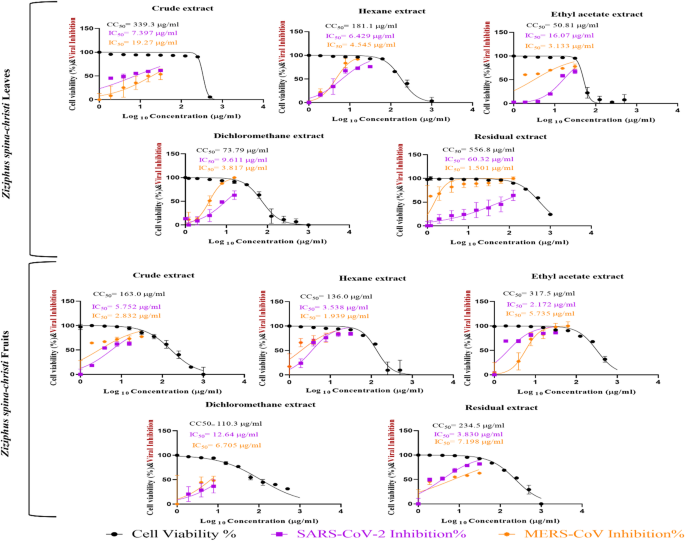
Since acute respiratory infections are the most prevalent illnesses in humans and can develop into respiratory tract infections, they pose a serious threat to public health. One of the most crucial approaches to treating the respiratory tract is development of medications derived from natural sources. Ziziphus spina-christi (L.). is a well-known plant that has been used for centuries in the Middle East to treat a variety of illnesses, such as anti-inflammatory, anti-fungal, anti-microbial, and anti-viral activities. This study examined antiviral properties of Z. spina-christi leaves and fruits against three respiratory viruses: influenza virus H1N1, MERS-CoV, and SARS-CoV-2. The crude methanol extracts of the leaves and fruits were fractionated n-hexane, dichloromethane, and ethyl acetate, along with the remaining aqueous residues of the two parts to give their corresponding fractions. Chemical profiling of the crude extracts and fractions of the leaves and fruits was investigated using LC-ESI-MS/MS analysis. By applying in-silico molecular docking techniques, the compounds identified in the most active extract or fraction were examined to determine which phytocompounds might have antiviral properties and to predict how they function. The results showed that flavonoids, phenolic acids, saponins, sterols, and triterpenes and their glucosides are the major detected compounds in both leaf and fruit fractions and extracts. The most common phenolic in all six samples is caffeic acid, whereas the most common flavonoids in the fruits’ ethyl acetate fraction were quercetin, luteolin, taxifolin, and is quercetin. The common saponin chemicals found in leaf and fruit extracts and their fractions are lotoside II, Ziziphus saponin I, and betulinic acid. The results also exhibited that crude extract of leaves had high antiviral activity against H1N1 with IC50 equal 1.240 µg/ml and against SARS-CoV-2 with IC50 equal 7.397 µg/ml, by performed mode of action the results showed that the extracts had virucidal effect against three viruses by applying in-silico molecular docking techniques, binding energy with HA of H1N1 equal − 7.48 kcal/mol and binding energy with spike of SARS-CoV-2 equal − 10.18 kcal/mol. On the other hand, residual extract had antiviral efficacy against MERS-CoV with an IC50 equal to 1.501 µg/mL and binding energy with the spike equal to -8.19 kcal/mol. Our findings suggest that Z. spina-christi is a natural medication with potent antiviral effects. Acute respiratory infections represent a significant public health concern as they are the most common diseases affecting humans and can lead to severe complications when they progress to lower respiratory tract infections, a leading cause of morbidi... [35028 chars]


2026 Copyright © News-Matic.com. All Rights Reserved