


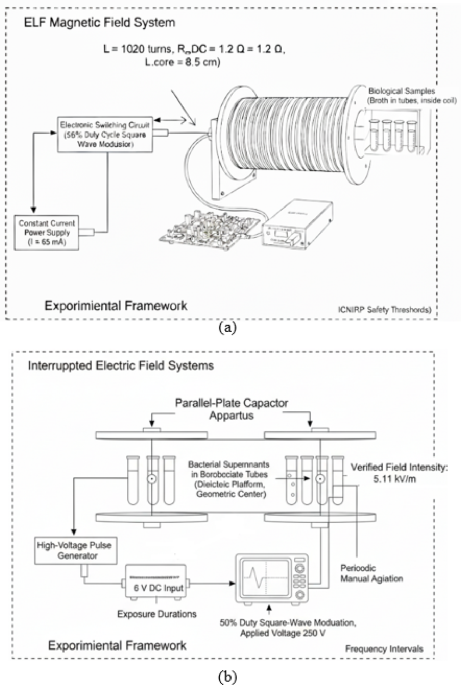
This study introduces an innovative electromagnetic nano-approach to combat high-severity bacterial infections without relying solely on high-dose antibiotics. We investigate the synergistic potential of extremely low-frequency pulsed electromagnetic wave (ELF PEMW) exposure (< 20 Hz) as a physical catalyst to enhance the bio-activity of ciprofloxacin-loaded chitosan nanoparticles (Cipro-C-NPs). This method provides a pivotal alternative for managing Escherichia coli, Pseudomonas aeruginosa, and Staphylococcus aureus in an era of escalating multi-drug resistance. Cipro-C-NPs were synthesized with high encapsulation efficiency. Bacteria were subjected to a multi-factorial screening involving three antibacterial agents, two physical fields (pulsed magnetic and electric), and varying frequencies (0.7, 6, and 20 Hz) for durations of 20 and 60 min. As a high-throughput preliminary screen, this work aimed to map the qualitative landscape of bio-electromagnetic interactions. Contrary to the hypothesis of enhanced membrane permeability, ELF PEMW functioned as a biophysical antagonist. The electromagnetic field appeared to trigger membrane hyperpolarization, increasing transmembrane potential and restricting porin-mediated transport of the antibiotic. Simultaneously, the field reduced the zeta-potential of the chitosan nanoparticles, leading to significant colloidal aggregation. These large aggregates were physically excluded from bacterial entry routes, resulting in increased Minimum Inhibitory Concentrations (MICs). Notably, the degree of antagonism was species-specific, suggesting that membrane capacitance and porin density dictate electromagnetic susceptibility. This study reveals a critical bio-electromagnetic trade-off: while physical fields can modulate cellular behavior, poorly tuned parameters can inadvertently fortify bacterial defenses and reduce drug bioavailability. These findings provide a vital “negative roadmap” for future research, highlighting the need for direct electrophysiological mapping of efflux pumps and membrane potentials. This work serves as a foundational step toward precision-targeted, physics-assisted antimicrobial therapies. The rise of antimicrobial resistance necessitates innovative strategies that reduce reliance on traditional high-dosage antibiotic therapies1,2. One of the most promising frontiers involves the application of extremely low-frequency pulsed electromag... [50297 chars]
ADVERTISEMENT

ADVERTISEMENT
2026 Copyright © News-Matic.com. All Rights Reserved


